Workshop for planned burn ignition leaders
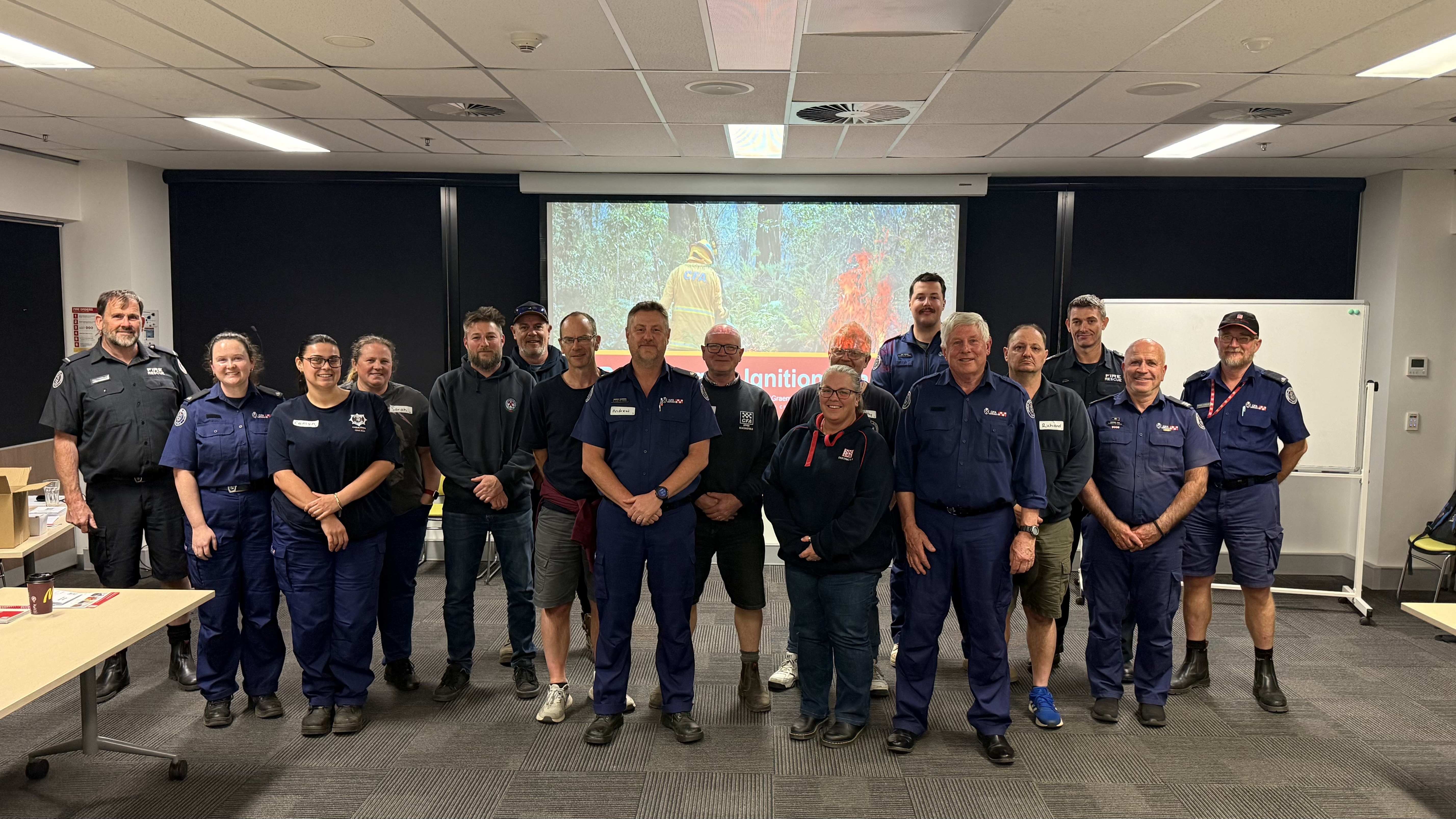
The South East Region Vegetation Management Team hosted a ‘Becoming an ignition leader’ workshop on 12 October 2026 at District 8 Headquarters.
The aim of this pilot workshop was to increase awareness of the ignition leaders’ crucial role at planned burns, and to explain how operational and non-operational members can get involved in planned burning across the region and statewide.
Ignition leaders supervise a crew of firefighters who burn fuels at a planned burn in accordance with a burn plan. An ignition leader is fundamental to the success of a planned burn, and their transferable skills can be used during fire suppression when conducting burning out and backburning operations.
The workshop was attended by 13 District 8 volunteers and five staff, with presentations by CFA Wildfire Instructor Graeme Briggs, Ruby Fire Brigade volunteer firefighter and Planned Burn Operations Officer Darren Hardacre, and Statewide Commander Planned Burning Tim McKern.
“Effective ignition can make or break the success of a planned burn,” Darren said. “As a planned burn operations officer, savvy ignition leaders are key to making this happen. The best way to learn is through practical experience and working alongside experienced practitioners on the day of a burn.”
The workshop was organised by South East Region Vegetation Management Support Officer McKenzie Wilson, and more workshops are planned throughout South East Region over the next 12 months. These form part of a broader training pathway for members involved in planned burning across the state.
Tim encouraged CFA members to join the Planned Burn Task Force.
“Planned burning is one of more than fifteen burn and non-burn fuel treatments that CFA can help landowners and managers use to reduce fire risk on their land,” Tim said. “The Planned Burn Task Force is a statewide program funded through Safer Together that deploys available CFA volunteers to planned burns to districts in need of personnel.
"CFA members interested in joining the Planned Burn Task Force can register via Members Online and be deployed to assist with planned burning when requested.”
Deputy Chief Officer South East Region Trevor Owen was keen to emphasise the importance of managing fuels.
“Effective fuel management is a shared responsibility between land managers, fire agencies and community. Planned burning can make a real difference in reducing fire spread and increasing firefighter and public safety during fire suppression operations, Trevor said. “CFA is committed to developing and growing our planned burning capability, and I encourage all members to take up opportunities to learn and contribute toward delivering the interagency CFA and FFMV Joint Fuel Management Program.”
Brigade members who are interested in managing specific fuels and vegetation risks within their response area are encouraged to first talk to their brigade management team, then seek further advice from the brigade’s catchment commander and the Regional Vegetation Management Team.
To register interest in joining the Planned Burn Task Force go to Members Online.
| Submitted by |
Rohan Gordon |