Helping residents with targeted property advice
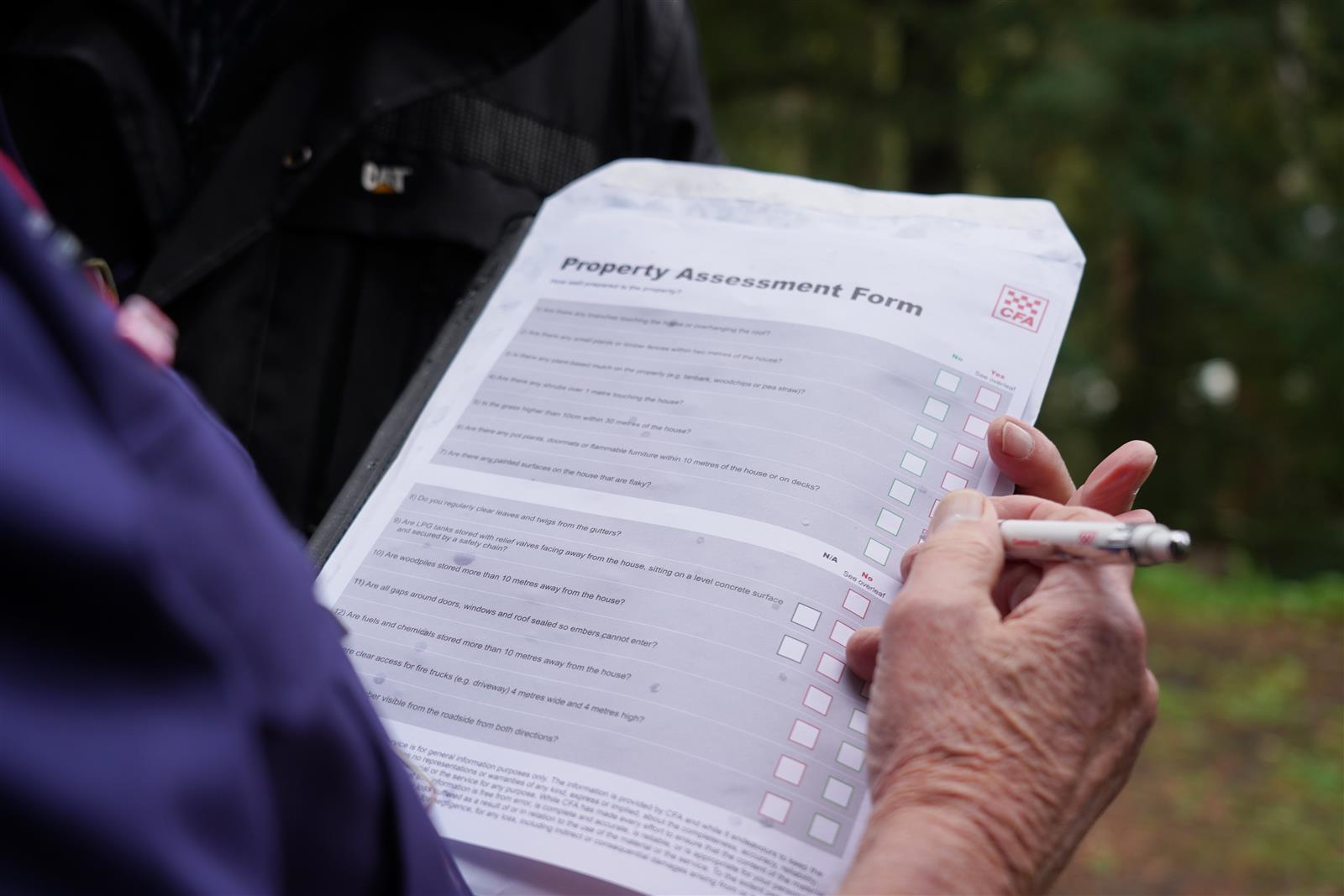
CFA’s Property Advice Visit Service (PAVS) is a free initiative that connects trained CFA members with households at risk of fire.
Through tailored in-person visits to properties, CFA members help residents understand their local fire risk and offer practical, property-specific advice to improve preparedness.
The aims of PAVS are to:
- raise awareness of bushfire risk at the property
- encourage residents to take action to reduce their risk
- support informed planning and decision-making
- build trust and connection between CFA and the community
- refer residents to where they can seek further information.
Visits can be initiated by community members wanting advice, or by CFA members who target at-risk properties.
CFA members use the following ways to reach residents to promote the service in their local area:
- Use local events to promote PAVS.
- Share flyers or postcards through letterbox drops.
- Post on brigade or community social media sites.
- Advertise in local newspapers and newsletters.
- Offer PAVS to new residents or during community campaigns.
- Promote the service in new resident kits.
- Use existing community networks (for example, sports teams, local Landcare groups or Neighbourhood House).
During a visit
Visits can vary depending on the property. Following the Property Assessment Form, CFA members walk around the property with residents to help them understand how to improve access for emergency services, vegetation planning, design and planting, as well highlighting various actions to prepare their property. The visit is recorded in Survey123 and supported by the PAVS pack, which includes printed resources to prompt a bushfire planning discussion.
The purpose of the visit isn’t to advise on technical details. Instead, it’s focused on generating conversations between residents and brigade members about practical ways to reduce fire risk and improve preparedness.
Benefits for community and brigades
Many factors, such as limited time, low awareness, lack of concern, or mobility challenges, can prevent community members from attending preparedness sessions or taking action. PAVS helps break down these barriers by meeting residents at their homes, at a time that works for them, and tailoring the conversation to their unique circumstances. This personalised approach can lead to stronger engagement and improved fire preparedness outcomes.
PAVS takes a strength-based and person-centred approach which means recognising individuals as experts in their own life. It’s not about doing things for them but about helping them understand their risk and pointing them to tools and services that can help. By taking a person-centred approach, CFA members provide the information and encouragement residents need to support their own decision-making.
One of the most important benefits for CFA is that PAVS sessions can strengthen community connections. During the PAVS visit, brigades can also collect information to help them in operational readiness such as water points, property identification, access and egress, landscape risk, and residents at higher risk.
Strengthening PAVS evaluation
To ensure PAVS continues to deliver a meaningful impact, CFA is enhancing how we evaluate the program to help us understand what’s working, where improvements are needed and how PAVS contributes to community safety. Evaluation is more than just measurement – it’s about learning. It helps us reflect on what’s effective, what’s not and how we can evolve the program to better support communities in bushfire-prone areas.
The project team has been visiting regional areas to engage with brigades, watch PAVS in action and gather insights from those delivering the program on the ground. These real-world perspectives are essential to help us shape a more robust and responsive evaluation framework.
| Submitted by |
News and Media |