Fire dynamics course delivered to fire investigators
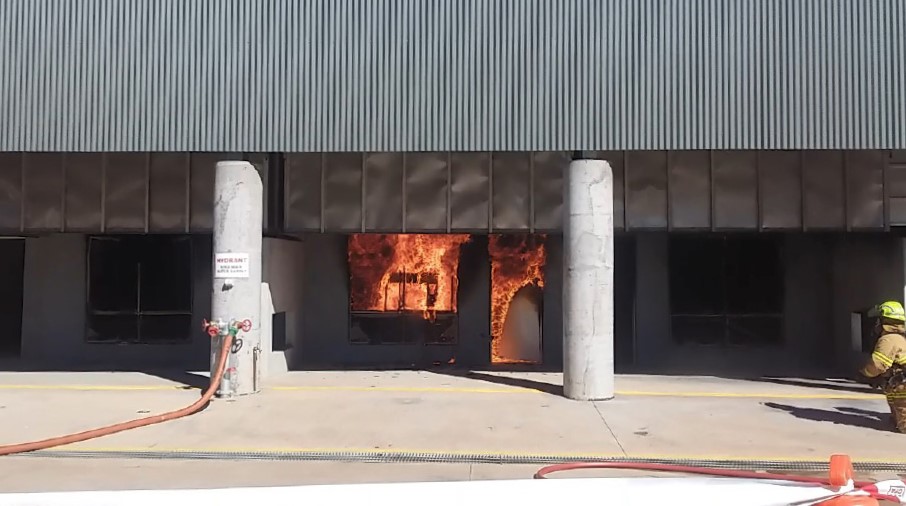 Fire investigation training facility room burn
Over the weekend 14-15 March 2026, CFA fire investigators attended the VEMTC Huntly training campus to undertake the fire dynamics course.
This course aligns with the National Public Safety Training Package unit of competency - PUAFIR606 - Apply principles of combustion and fire dynamics to fire scene investigation, and forms part of the professional development courses available to CFA fire investigators.
It includes theoretical and practical skills and knowledge required to apply the principles of fire science and fire dynamics to a fire scene investigation.
The subjects covered in the course include fire investigation scientific principles, phases of fire development leading to the fire scene indicators to identify the origin and cause of fires.
For the practical component of the course, two room burns were undertaken at the purpose-built Fire Investigation Training Facility. The rooms were set up and furnished as bedroom and lounge room scenarios with different ignition methods used to light the fires.
Prior to the fires being ignited the fire investigators documented the room layout, fuel loadings and ventilation components, along with predicting the times for the rooms to reach flashover.
To study the fire dynamics, each of the burn rooms had thermocouples installed at ceiling, mid-level, and floor levels. The temperature data obtained from the thermocouples was recorded and was provided to the course participants to undertake further analysis relating to the fire behaviour and identification of the key stages of fire development within each of the rooms.
The development of the fires was also captured from within the room from the time of ignition through to flashover and then extinguishment. The video footage provided valuable information relating to the various stages and time frames of the fire behaviour and development.
Overall, the course was well received by the participants and provided enhanced skills and knowledge relating to the linkages between fire dynamics and fire scene examination processes that are used by fire investigators to establish the origin and cause of fires.
| Submitted by |
Nicole Harvey |