Strong incident management capability happens by design
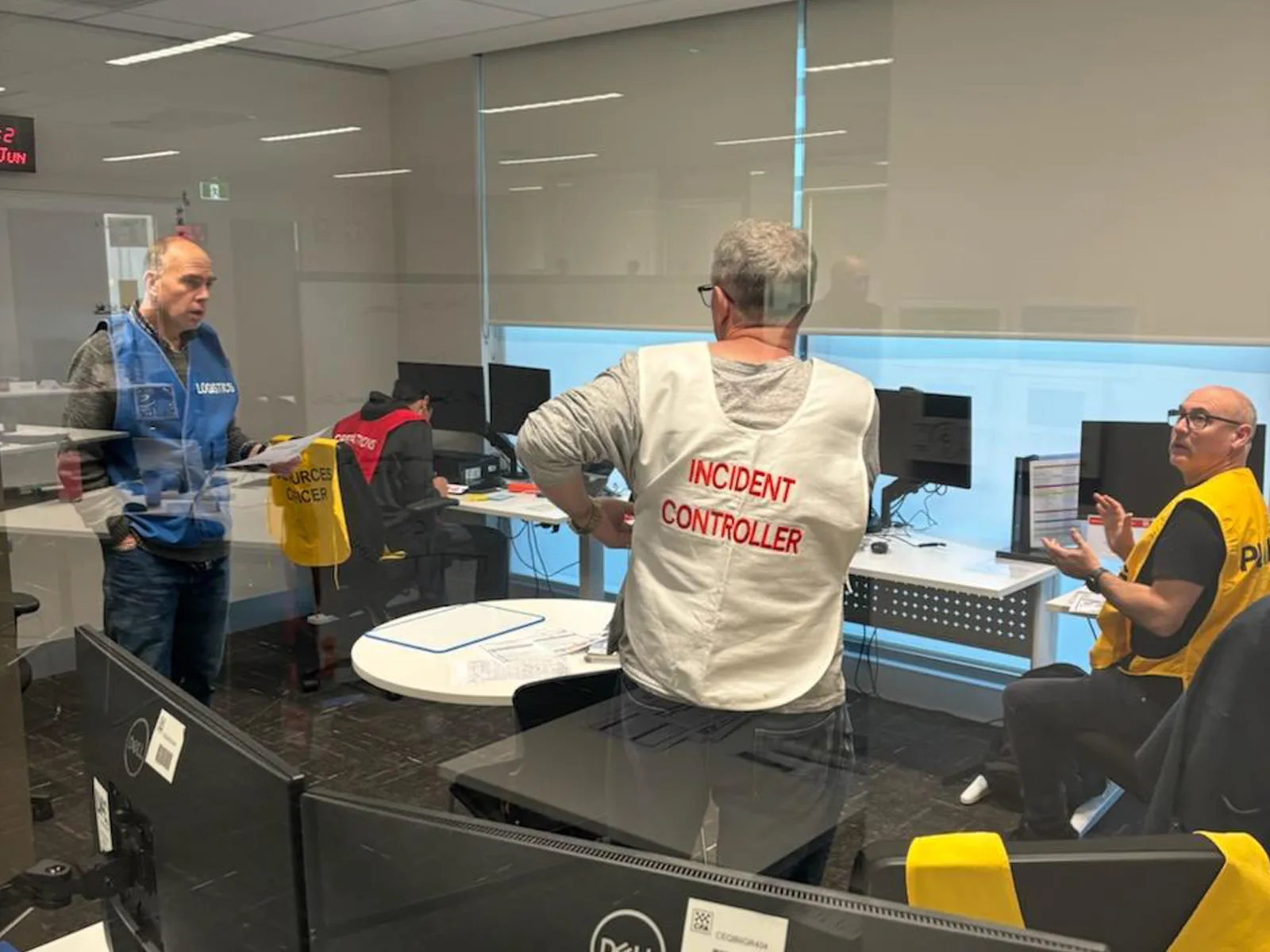
Recognising emerging capability risks, District 11's DPC Training Sub-Committee set out to strengthen its pipeline of Level 2 incident controllers and operations officers to address gaps identified in the District Planning Committee's risk matrix.
Rather than relying on traditional succession pathways, the committee established a clear objective: train 10 members to Incident Controller or Operations Officer level within two years.
Groups across the district were tasked with identifying members who demonstrated the experience, aptitude and leadership potential required for higher-level incident management roles. Candidates were then reviewed by experienced incident management personnel to ensure the pathway focused on capability, not simply participation.
District 11 DPC Training Sub-Committee Chair Stuart Johnston said the goal was to build sustainable capability for the future, as "we recognised the need to be self-sufficient".
The first six selected members attended the dedicated South East Region 'Control a Level 2 Incident' course delivered at the Warragul Incident Control Centre, with a further three members attending the second course.
The initiative was led by DCO Trevor Owen and South East Region Learning and Development in partnership with CFA IMT Training.
For Stuart, who was also a participant on the course, the experience reinforced the importance of strategic leadership.
"Students received instruction while being continually observed and assessed on their input, influence and ability to make time-critical decisions under pressure. Time frames were tight and the focus was on strategic leadership, not fireground tactics," Stuart said.
Participants from different districts were challenged to analyse limited information, establish priorities and develop strategic direction in realistic incident scenarios.
Reflecting on the experience, Stuart said, “Watching teams of people from different districts come together to analyse limited information and establish strategic direction highlighted the importance of trusted incident management structures as incidents escalate beyond Level 1."
Stuart also acknowledged the involvement of Level 3 Incident Controller and CFA subject matter expert Neil Thompson, whose contribution ensured a strong CFA operational focus throughout the training.
"Having CFA instructor Neil Thompson in the mix as our CFA subject matter specialist enabled a contextualised focus to meet CFA's needs," Stuart said.
Neil said structured development is critical in a region as busy and diverse as South East Region.
Neil's ongoing involvement in incident management training will see him working closely with many of these participants, not only through Control a Level 2 Incident courses but also through other operational IMT training delivered as part of the pathway.
"It's vital that we continue to develop our incident leaders to ensure CFA can meet community and government expectations. This training is building the confidence and knowledge required for CFA personnel to manage complex incidents and lead people effectively under pressure."
The benefits extend well beyond emergency management, with the leadership skills developed through the pathway strengthening brigades and communities alike.
Speaking about the work underway to develop IMT capability across the region, Neil said, "The skills CFA personnel learn are transferable in so many different ways. Members can take these vital skills and apply them in leadership positions across CFA brigades."
Less than 12 months into the initiative, the strategy is already delivering results in District 11. A total of nine District 11 members have progressed through Control a Level 2 Incident training, while two members have recently completed Manage a Multi-Team Sector. Other members have stepped into strike team leader and sector commander roles.
"To achieve nine of the District 11 DPC Training Sub-Committee's target of 10 members within 12 months is remarkable," Stuart said.
District 11's progress demonstrates the value of identifying future leaders, investing in their development and creating structured pathways to success.
This work forms part of a broader South East Region commitment to Incident Management Team capability. In 2026 alone, the region delivered two Control a Level 2 Incident courses and two Manage a Multi-Team Sector courses. A further two Manage Operations at a Level 2 Incident courses are planned before summer, with additional courses scheduled in the new year.
The importance of taking a deliberate approach to leadership development was echoed by ACFO RC and Level 3 Incident Controller Mike Owen, who said, "We cannot continue hoping that incident controllers will just evolve."
DCO Trevor Owen highlighted that, “Developing additional Level 2 incident controllers strengthens our ability to manage higher-risk and more complex emergencies. Having more qualified Level 2 incident controllers available places the agency in a stronger position to effectively manage and support Level 2 incidents while working alongside our emergency management partners."
This is more than delivering courses. It is a targeted investment in operational leadership and Incident Management Team capability, ensuring CFA is well positioned to support communities through increasingly complex emergencies, both now and into the future.
South East Region Learning and Development remains committed to supporting this work, ensuring the region continues to build the leaders and incident management capability needed to meet future challenges.
| Submitted by |
Karlie Stocker |