Looking to the future at the Aerial Firefighting Conference Asia Pacific
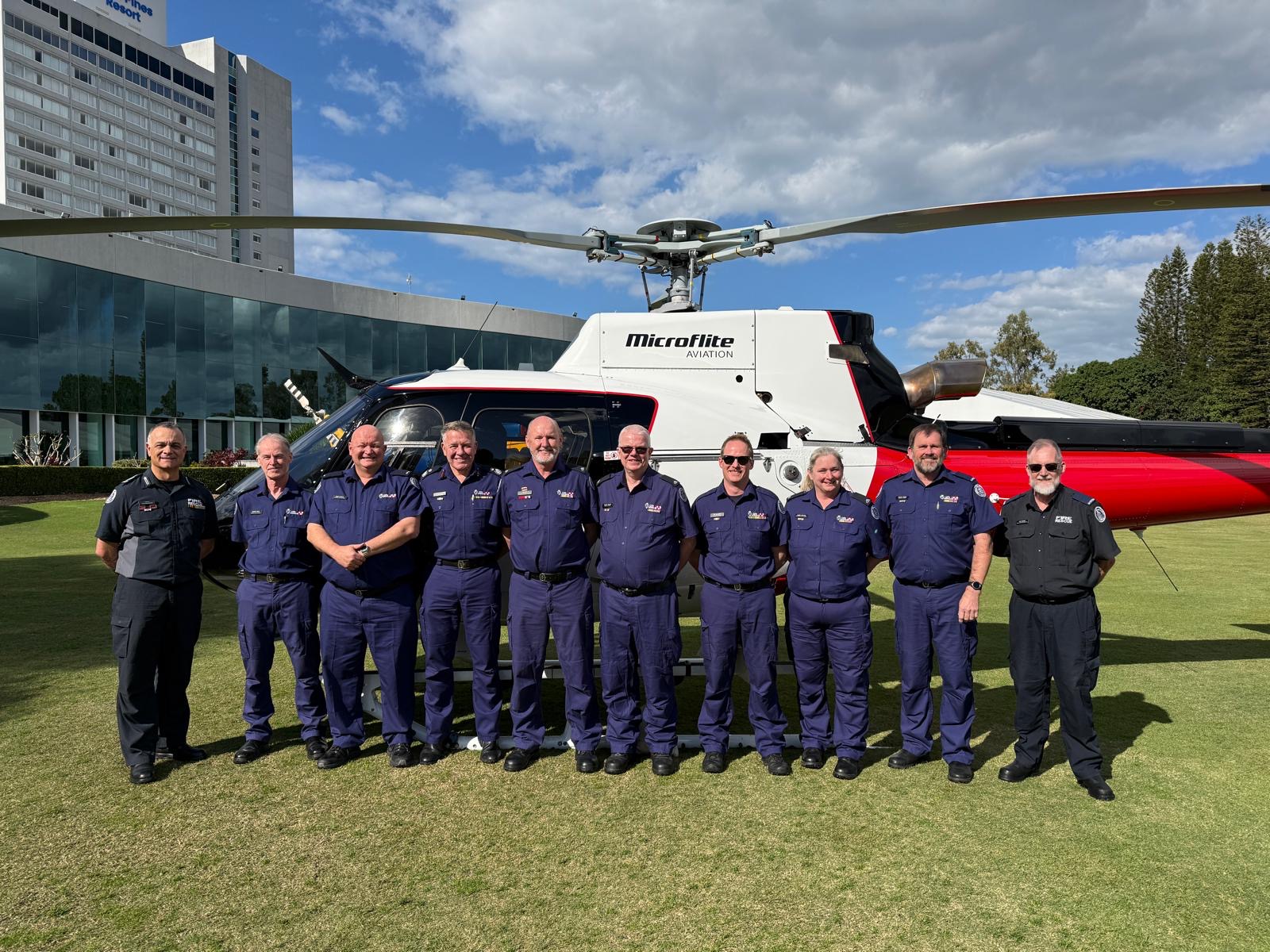 Conference attendees in front of one of the helicopters on display
When the email arrived to say I'd been selected to attend the Aerial Firefighting Conference Asia Pacific on the Gold Coast, I was excited.
Reading why our group had been chosen made it even more special and, from that point on, I found myself counting down the days.
The conference brought together fire agencies, aviation operators, researchers and industry partners from Australia and overseas, all working towards the same goal – making aerial firefighting safer, smarter and more effective.
One of the first things that struck me was the scale of the exhibition hall. It wasn't just aircraft operators; it was an entire industry. From aerial imaging technology and firefighting systems to fuel suppliers, aircraft manufacturers and specialist equipment, there was an incredible range of organisations all contributing to aerial firefighting in different ways. Every conversation offered a different perspective on where the industry is heading.
Meeting Dr Matt Plucinski over dinner on the first evening was an unexpected highlight. Having the opportunity to chat with someone whose research is helping shape aerial firefighting before hearing him present the following day made his presentation even more engaging.
Across the two-day program, several themes continued to emerge. Australia's sovereign aerial firefighting capability featured heavily, with many presenters discussing the need to reduce reliance on overseas aircraft as global fire seasons increasingly overlap. Emerging technology, research-driven decision making and stronger collaboration between agencies were all recurring topics, highlighting just how quickly the aviation sector continues to evolve.
One of the standout presentations came from Stu Sprung, Vice President of EmberWorks – Coulson Aviation's Research and Development Division. His presentation about the Los Angeles wildfires demonstrated how operational intelligence and technology are increasingly influencing firefighting strategy.
Dr Plucinski's presentation, Why Fly?, reinforced the importance of backing operational decisions with robust scientific evidence. It was encouraging to see research being used to ensure aerial resources are delivering the greatest possible benefit.
For me, however, the presentation that stood out most came from John McDermott of McDermott Aviation. John outlined his company's work to establish Australian helicopter manufacturing through production of the McDermott 214ST, alongside development of the Transall C-160 Large Air Tanker.
Later that afternoon, a small group of us travelled to inspect the Transall aircraft. Seeing the Australian-designed removable water tank system up close, walking through the aircraft and speaking with the pilots gave us a real appreciation for the thinking behind the project. Its ability to operate from significantly shorter runways has the potential to expand where large air tanker operations can be based across Australia.
The formal presentations were only part of the experience. Some of the most valuable conversations happened between sessions while talking with pilots, researchers, aviation managers and representatives from other agencies. It reinforced just how collaborative the aerial firefighting community is and how willing people are to share ideas and lessons learned.
Day two focused on future capability, aviation safety and the challenges facing the industry over the coming decade. NSW RFS Commissioner Trent Curtin delivered a presentation that reinforced the importance of recognising operational risk and having the confidence to reject tasks when the level of risk outweighs the potential benefit.
Presenters from New Zealand, Malaysia, the United States and France also shared how their agencies are adapting to increasingly complex fire seasons, providing valuable perspectives on the challenges and opportunities facing aerial firefighting worldwide.
As the conference came to a close, the helicopters that had been on static display throughout the event departed one by one. It was one of those simple moments that summed up the atmosphere of the conference. Golfers paused mid-round, delegates stopped their conversations and everyone took a few moments to watch them lift off. No matter how long you've been around helicopters, they're still impressive to watch.
Before leaving, our CFA group held a quick debrief to discuss what we'd learnt and how some of those ideas could contribute to CFA's aviation capability into the future.
I returned to Victoria with new knowledge, valuable professional connections and an even greater appreciation of the innovation taking place across the aerial firefighting industry. More importantly, I came away with confidence that the willingness of agencies, researchers and industry partners to openly share ideas will continue to strengthen aerial firefighting across Australia.
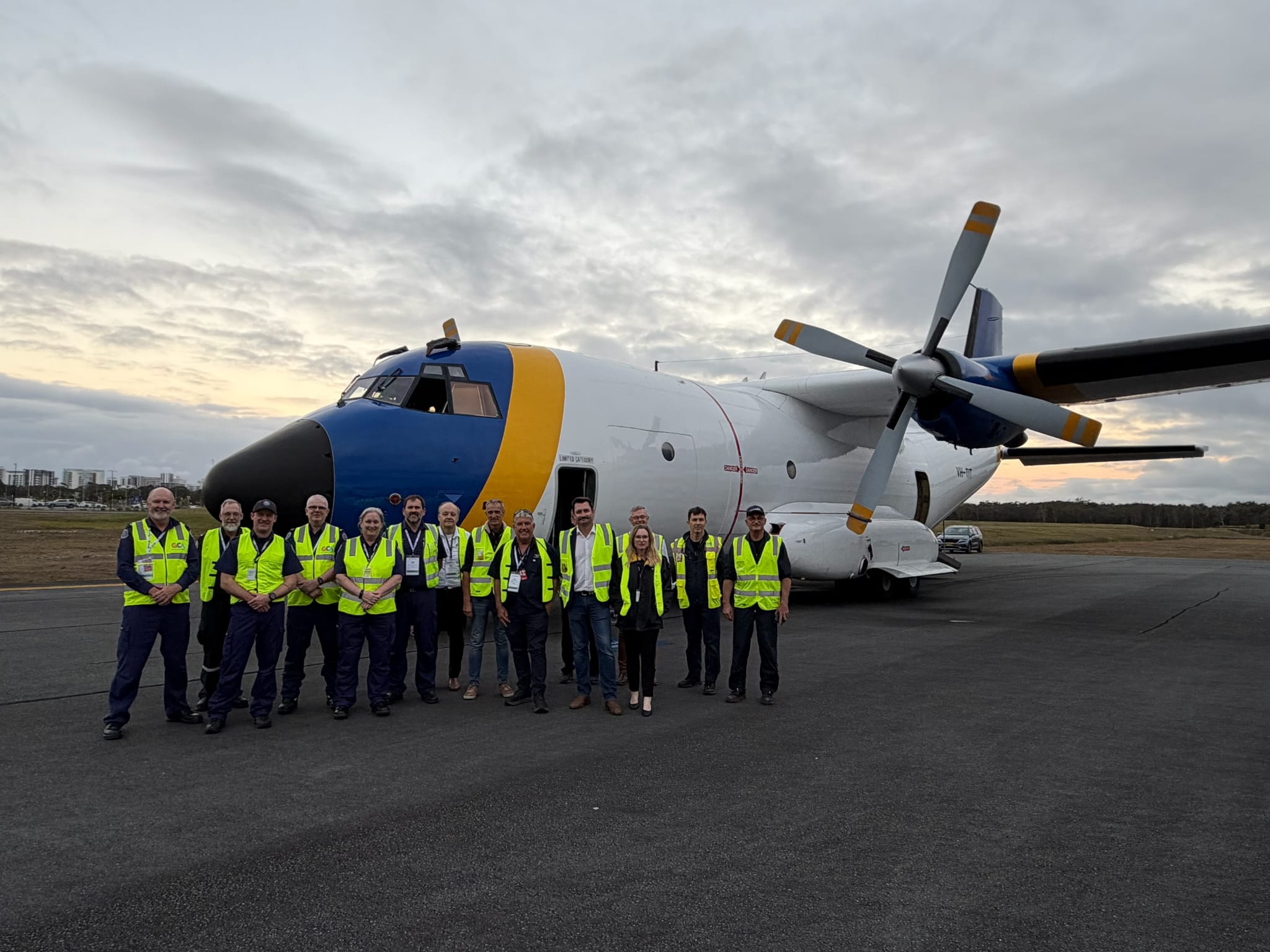 The Group in front of the Transall Tankers C-160 LAT
-
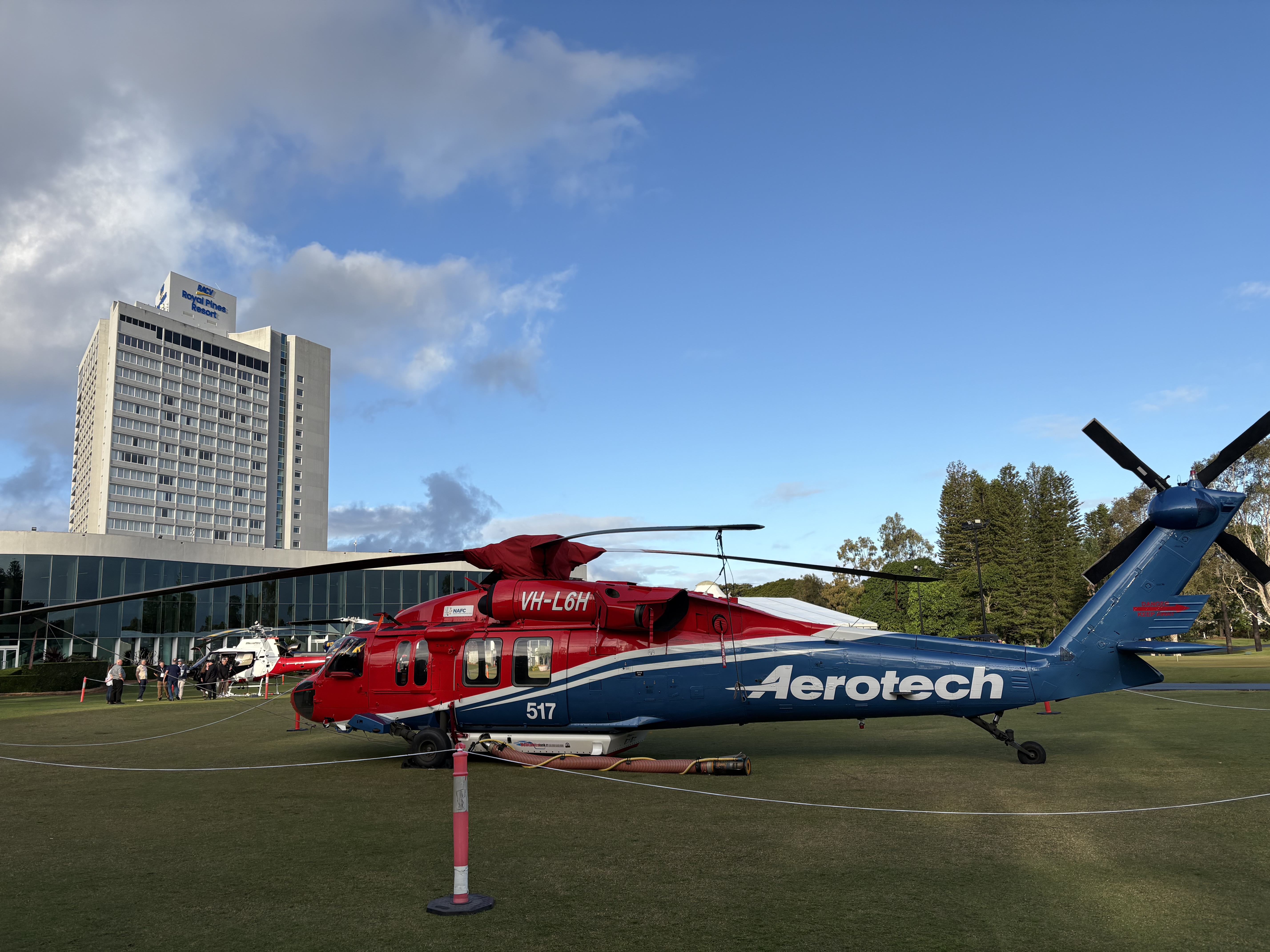 The BlackHawk next to the first hole of the RACV resort.
-
-
-
| Submitted by |
Phil Sehlmeier |